Wednesday, 26 May 2010

Zero Sum Gains in regional development

A major criticism of regional inward investment strategies is that public money simply gets diverted to unelected regional development agencies who spend the cash competing against each other to attract companies to move into their boundaries.  Sometimes this has been done in a quite underhanded or corrupt manner.  For example, see the antics of the Welsh Development Agency in the 1990s who simply went around the country poaching companies from other places by convincing them to move to Wales by offering a ridiculous level of grants or tax breaks.

Whether any national interest is being served here is questionable.  Whereas there is some value in relocating jobs from growth regions to places which lack local employment opportunities, there seems to be little logic in companies moving from one declining region to another.  So news that a recycling company is moving to Irlam, bringing 30 skilled jobs, is obviously good news for local people and businesses.  The reasons for doing this maybe perfectly legitimate, for example, to access lower cost premises, skilled workers etc.

But Irlam's gain is the West Midlands' loss.  In national terms this is a zero sum gain.  No new jobs or investment are created, there are simply moved around the country.  In fact evidence from other company relocations suggests that when companies do relocate they often rationalise their business in the process, resulting in job losses not gains.

From the perspective of Regional Development Agencies, inward investment is an easy option, a quick fix and short term way of fixing the employment crisis in their area.  It is much easier to 'create' jobs in this way, than for example, working with indigenous companies to build their skill capacity and promote local in-situ growth over time.   Evidence suggests that companies who develop in this way or more likely to become embedded in the local economy and therefore much less likely to move on if they receive a better offer from another region.

Another concern is that companies who move in are much more likely to move out again compared to embedded firms.  Often many inward movers move on again within five years.  Global corporations, such as Nike, have this locationally built-in to their business model, to enable to move free across national boundaries extracting the  best surpluses they can get from what are otherwise poor national governments.  Other companies also use locationally flexibility to threaten government, to extract benefits simply to remain in the same place.

With the recent change of government the future of regional development agencies is being brought into question.  Is there a better model of promoting local economic development without recourse to needless and vicious spiral of place competition for mobile investment?

Monday, 24 May 2010

Coalition confirms plans to abolish regional spatial strategies - Regen Daily Bulletin - Regen.net

The much derided Regional Spatial Strategy is to disappear courtesy of the Con-Dem coalition. Hopefully this will mean Salford is no longer committed to building a ludicrous 10,000 new properties within its boundaries. A temporary reprieve for Salford's Green Belt, then? Perhaps, but now Salford City Council will have to deal with the might of Peel Holdings by itself.


Coalition confirms plans to abolish regional spatial strategies - Regen Daily Bulletin - Regen.net

Monday, 10 May 2010

Transport plans to be scrapped

Plans to improve Irlam Station announced prior to the election, identified as one of the most unsafe, least accessible stations in the county, now look likely to be scrapped after the election. Hmmm?

Saturday, 8 May 2010

Local Election Results


Cadishead ward
CandidatePartyVotes cast
CARR, JenniferLiberal Democrats679
HUDSON, ChristineLabour Party2,014
KELLY, TonyConservative Party1,267
WARD, ColinBritish National Party346
  • Elected: HUDSON, Christine (Labour)
  • Electorate: 7,614
  • Votes cast: 4,334
  • Turnout: 56.9%
  • Majority: 747
  • Void votes: 28

Monday, 3 May 2010

Multisol Group and the Nomads of the Global Economy


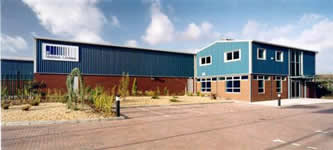
Multisol (Irlam)
Multisol are head-quartered in Nantwich but have a small presence in Irlam.  Essentially they distribute chemical, lubricants and solvents to an international market.  The company also has offices in Spain, France and South Africa.  This profitable business generates around £113m sales and employs 120 people. 
Nomads of the Global Economy
It might not come as much as a surprise to regular readers of this blog, that the ownership of Multisol is  opaque, rendering the question of where its business is exactly located (See: Cadishead in Space, 24.8.08).  Resorting to binary geographies of global v local simply doesn't provide us with adequate theoretical tools to explain the complex geography of the firm in contemporary times.  Multisol is local, regional, national and global at the same time.
In 2008 the company was bought out by its own management team, even though the previous owners continue to hold a stake in Multisol.  The deal was rushed through to avoid the impact of changes to the Capital Gains Tax rules.  The move was facilitated by KBC Capital - a vision of KBC Bank NV (in other words they stumped up the necessary loan to enable the buyout to take place).  KBC Bank NV are actually based in Antwerp Belgium, which is in itself a subsidiary of the Belgium KBC Group.  Perhaps the bank is not too well known in the UK, but it is actually one of the largest in Europe.  
If Wikipedia is to be believed then the history of this bank can be traced back to 1889 with the foundation of the Catholic Volksbank van Leuven.  Perhaps not enough is understood how global companies with humble beginnings diffuse particular cultural practices across the world as they expand.  Whereas there is always something distinctly American about KFC or McDonalds, there appears to be something distinctly Flemish about KBC.  In 1935 KBC merged with two other banks to form the Belgian Kredietbank - which under the leadership of Fernand Collin, aimed to define a Flemish postwar economic recovery.
The Manchester Evening News recently reported there were plans afoot to float Multisol on the Alternative Investment Market (AIM).  This was news to me, an alternative self-regulating stock market, which runs in parallel to the Stock Market we love and loathe!  Companies floated on this alternative market are advised by a Nominated Adviser or Nomads, according to their jargon.  This figure of a nomadic financial advisor perhaps personifies the liquid and mobile qualities of the global market place, a world in which the notion of place has little fixed meaning, a figure left drifting on streams of financial data and investment flows, like a dull accountancy version of the Matrix.
Sources:


Subscribe via email

Enter your email address:

Delivered by FeedBurner

Subscribe Now: Feed Icon